
Theoria Weekly #3
Youran Diary, Luckin Coffee and Pizza Hut

Diary farming sector shows sign of recovery
The diary farming sector in China has been in a downturn since around August 2021, when raw-milk prices began falling from roughly RMB 4.4/kg to close to RMB 3.1/kg. The main problem was a classic supply-demand mismatch: farms expanded production during the previous upcycle, just as consumer demand for dairy products began to weaken. Milk prices eventually fell below the production costs of many farms, forcing smaller operators to either shut down or cull low-yield cows to conserve cash.
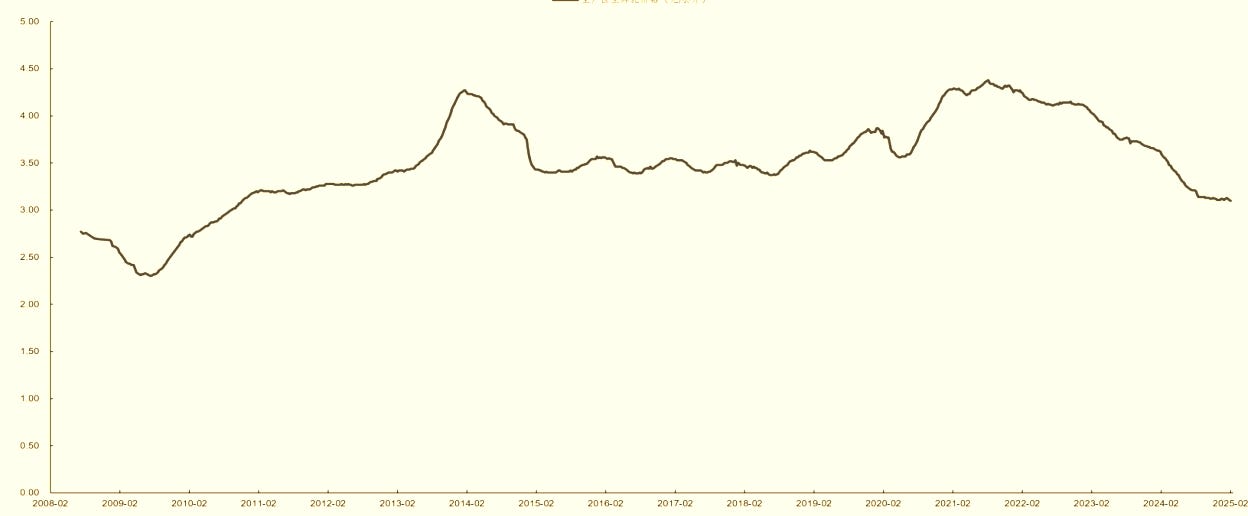
On July 28, Youran Dairy (9858.HK) issued a positive profit alert, expecting to make a profit in H1 2026—its first profit since 2022. The turnaround comes as China’s raw-milk market is finally showing signs of recovery.
Spot milk purchase prices in several major northern producing regions have rebounded by as much as 24% from their lows. China’s dairy-cow herd declined by around 550,000 head in 2025 and is expected to shrink by another 150,000–200,000 in 2026. Meanwhile, the amount of surplus raw milk processed into milk powder by leading dairy companies has fallen from around 20,000 tonnes per day at its April 2025 peak to just over 4,000 tonnes per day in June 2026—a clear sign that oversupply is easing.
What’s more, On July 20th, Modern Dairy announced it has acquired 80% of China Shengmu, China’s largest organic dairy farming company. Industry consolidation is a typical early sign of a new capital cycle.
Interestingly, the stocks moved well before the underlying milk market recovered (something I still find a bit puzzling). I bought Youran Dairy in late 2024 and sold after the shares had risen 3–4x:
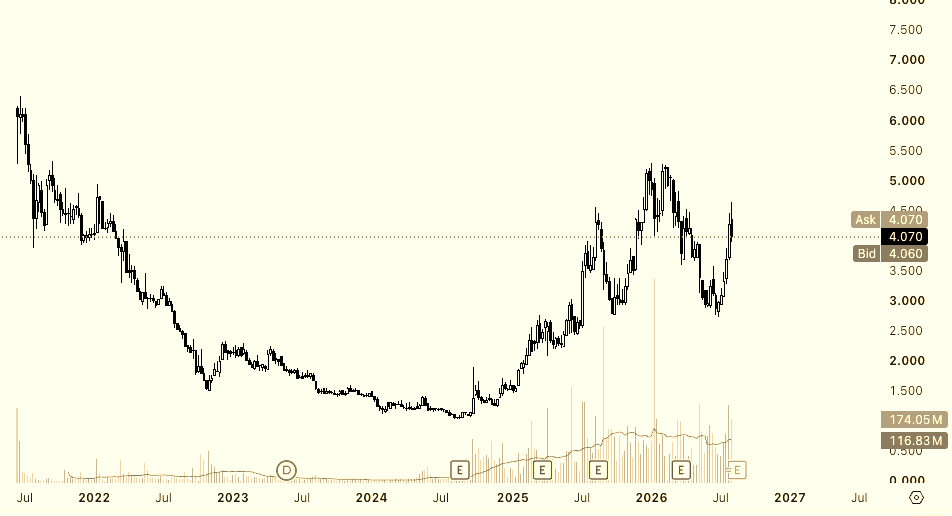
Although I won’t buy Youran or Modern today, as I think the setup then was much more attractive than it is today, I think it’s worthwhile to jot down my thinking process as it’s a common pattern in cyclical investing.
A typical commodity company suffers both volume contraction and unit price decline during a downturn: therefore earnings fall, and the valuation multiple compresses. Interestingly, dairy farming’s earning gets an extra distortion, as milk cows are recorded as biological assets and regularly revalued based partly on assumptions about future raw-milk prices. As the result, back in late 2024, the stock was trading at 2x-3x pre-downturn earnings.
I had little doubt that milk prices would eventually recover, given China’s still-low dairy consumption compared with developed markets. And when the cycle turns, the mechanism I described above will work in reverse: revenue rises, margins improve due to both operating leverage and upward revaluation of biological assets, then multiple expands. The combination can create substantial upside.
The real question was whether Youran Dairy and Modern Dairy could survive the downturn, especially given their heavy debt loads. I was relatively comfortable for three reasons:
Economic of scale: together, their milk output is equivalent to roughly one-sixth of China’s national production.
Their advanced equipment, processes and vertically integrated feed and forage operations allow them to produce higher-quality milk at lower cost—and therefore sell it at a premium.
Most importantly, their parent companies are China’s two largest dairy-product producers (56% combined market share): Youran is controlled by Yili, while Modern Dairy is controlled by Mengniu. Both Youran and Modern are strategically important parts of their parent companies’ vertically integrated supply chains, with long-term fixed-price contract that offer some protection from depressed spot milk prices.
Luckin Coffee continues its aggressive expansion
Luckin Coffee reported its Q2 2026 results on August 3. Revenue rose 28.5% year over year to RMB15.9 billion, as the result of the company’s rapid store expansion. It added 2,714 net new stores during the quarter, bringing the total surpassed 36,000—nearly 17% higher than it had at the end of 2025. The market appeared pleased with the results, sending the shares up 5.7% that day. And on a static basis, the stock looks extremely cheap, trading at around 6x EV/EBIT if I simply annualize Q2 operating income.
The quarter showed little operating leverage though, with GAAP operating margin edged down from 14.1% to 13.4% year over year. One reason was higher sales and marketing spending, partly to promote Luckin’s bottled drinks and expand their distribution through more retail channels. Cost of materials also increased as a share of revenue because of fluctuations in raw-material prices, while store rental and other operating costs rose slightly as the store network expanded.
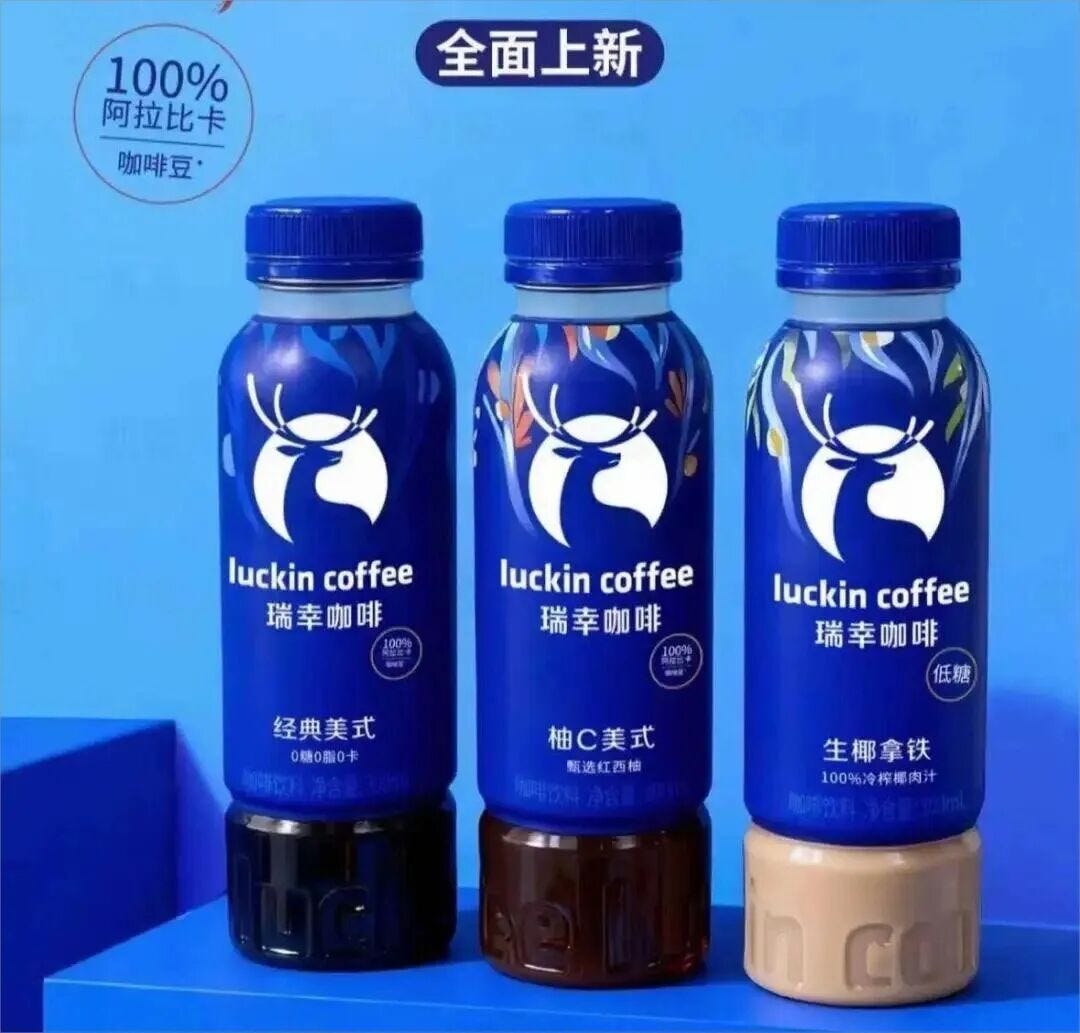
These increases were partly offset by a 3.1% year-over-year decline in delivery expenses. I thought this was due to the food-delivery price war between Meituan, Alibaba and JD cooling down, but the management attributed the decline to lower delivery costs per order from “enhanced fulfillment efficiency.”
Interestingly, management was much more willing to blame the decline in same-store sales growth (SSSG) on the food-delivery war. SSSG at self-operated stores fell 5.3%, marking the third consecutive quarter of decline, which management attributed to a tough comparison against last year, when delivery-platform subsidies created an unusually high base. But how can we tell that the weakness is not also a result of Luckin’s aggressive expansion and growing store density?
Using the estimate of 230k coffee shops nationwide, Luckin’s 36k stores already represent roughly 16% of the market—about one in every six locations. It is not obvious to me that the market can become much more concentrated, especially as competition continues to intensify. Mixue is pushing further into coffee through Lucky Cup; Guming now sells coffee through many of its tea shops; KCOFFEE has already opened more than 2,600 locations; and Wallace has also entered the market.
And that is before considering Starbucks. It recently transferred control of its China retail operations to a joint venture majority-owned by Boyu Capital (a firm known for its princeling-affiliation). The new structure is meant to make the business more localized and asset-light, while supporting an expansion from roughly 8,000 stores today to as many as 20,000 over time.
This brings me back to the nature of the business: coffee retail in China (perhaps in the world) may simply not be a great business.
Yum China Now Owns Pizza Hut in China
On August 7, Yum China completed its $1.2 billion acquisition of the Pizza Hut brand in mainland China from Yum! Brands, giving it full ownership of the brand rather than simply the exclusive right to operate it. The deal was part of Yum! Brands’ broader divestiture of Pizza Hut, with the rest of the global business being sold to private-equity firm LongRange Capital.
Pizza Hut China paid about $69 million in franchise fees to Yum! Brands in 2025, so the purchase price is roughly 17x last year’s fee—a multiple in line with where Yum China itself trades. The buyout also feels like a sign that Yum China is serious about the turnaround it has already been pursuing at Pizza Hut, after years of its underperformance.
Pizza Hut opened its first store in Beijing in 1990, the same year I was born. So it is not much of an exaggeration to say that Pizza Hut and my generation grew up together in China.I still remember when I was a kid, Pizza Hut was widely seen as an upscale restaurant. For many Chinese, it was their first introduction to pizza, which felt novel and somewhat fancy at the time. Stores were often packed, sometimes with long lines outside.
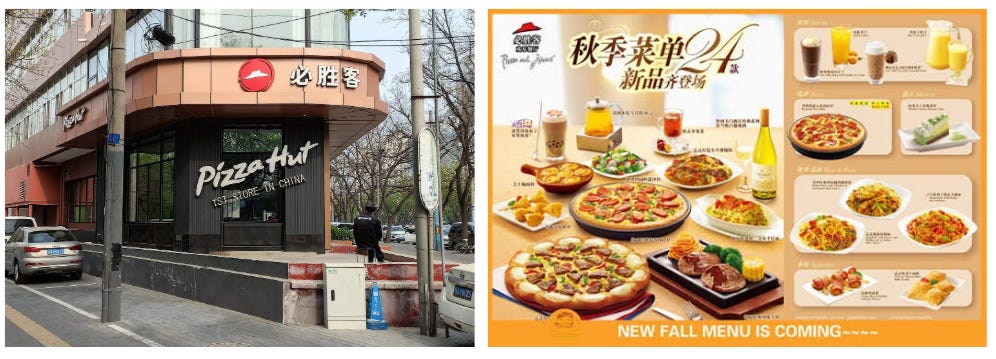
Sadly, Pizza Hut gradually lost its appeal, and today the brand simply feels much less relevant. One reason was clearly slow product innovation. When Domino’s China started rolling out new flavors and products aggressively, Pizza Hut was slow to respond, and only more recently has it begun to try to catch up.
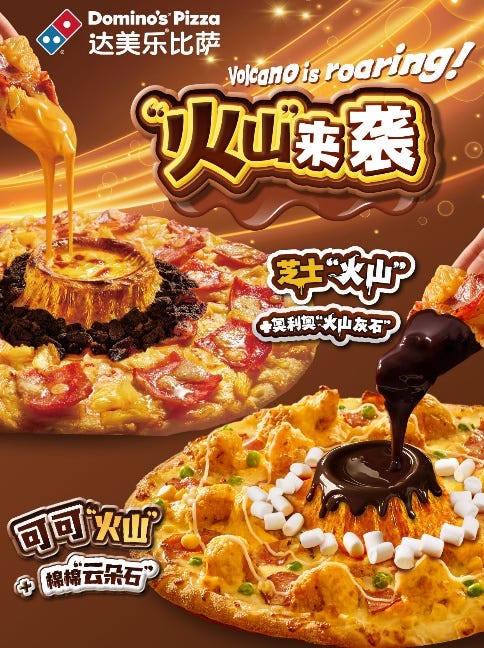
Service also became less consistent. More importantly, I think Pizza Hut has struggled with its positioning: it still wants to preserve some of its old dine-in, premium image, but at the same time it has tried buffets to compete for more price-conscious customers and delivery to mimic Domino. The result is a brand that can sometimes feel caught in between.
This is exactly the positioning issue management has been trying to fix lately. The direction is now somewhat clearer: Pizza Hut is being pushed toward a stronger value-for-money proposition, with lower-cost WOW stores helping it expand into lower-tier cities and a greater use of franchising.
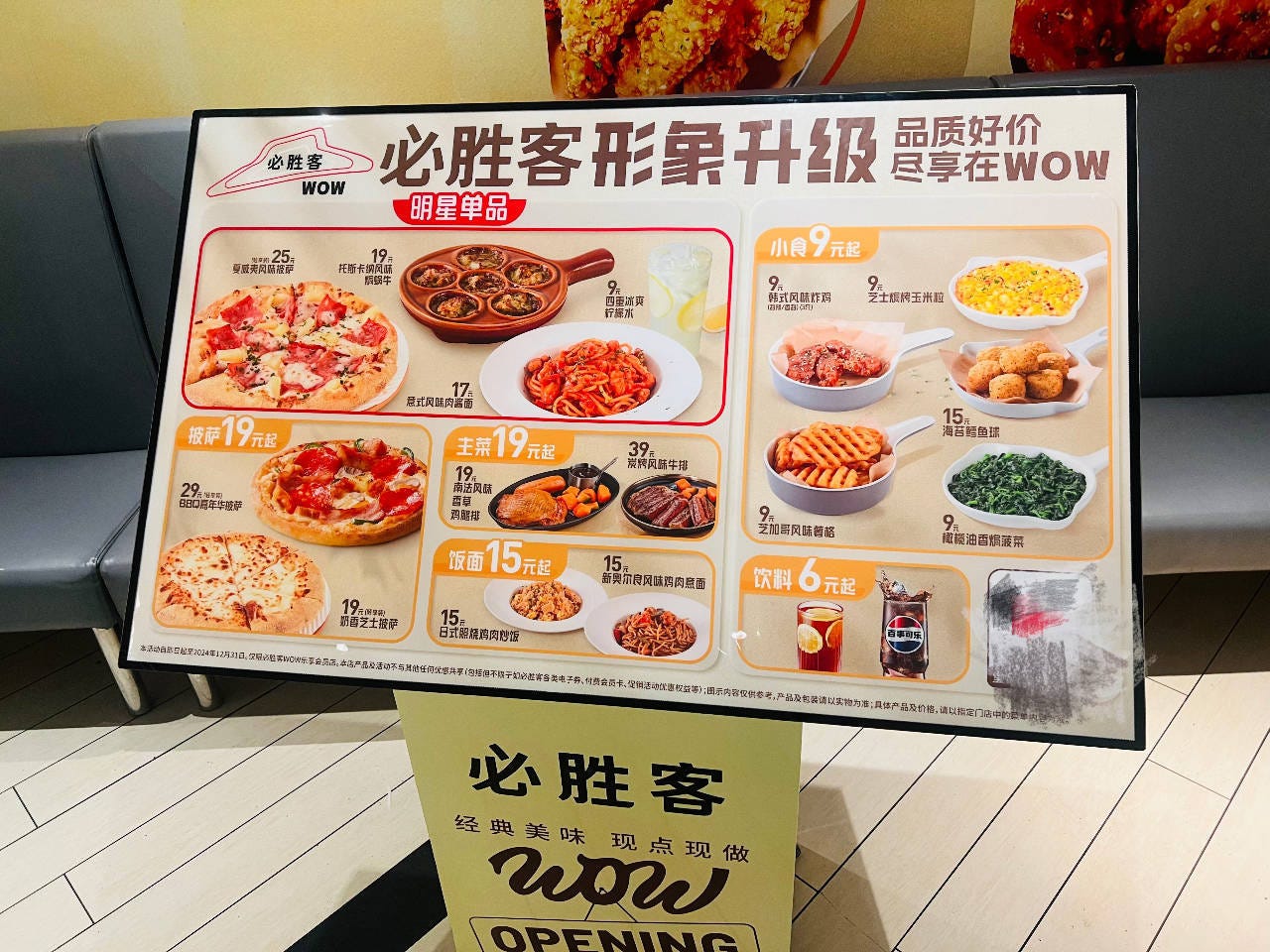
The recent numbers suggest the strategy is gaining some traction: in Q1 2026, same-store transactions grew 5% year over year, marking the 13th consecutive quarter of transaction growth, while operating margin expanded year over year for the eighth consecutive quarter. Whether the turnaround will ultimately succeed is still too early to say.
That’s all for now. See you next time.
Somebody got milk 🥛